童 · 어린 시절
여덟 살 아이로 태어난다
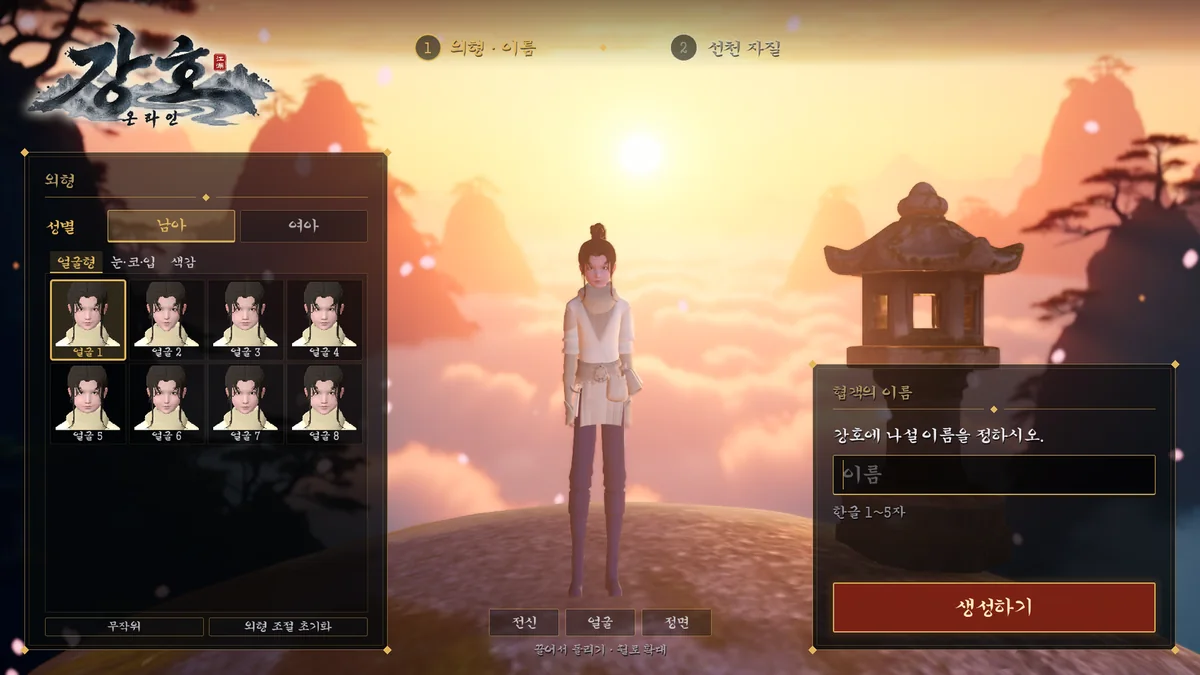
모든 협객은 여덟 살 아이로 태어나고, 열여덟이 되면 어른의 얼굴을 직접 고릅니다.
 ONLINE
01 · GAME
No sovereign is eternal. Only the story that is handed down remains.
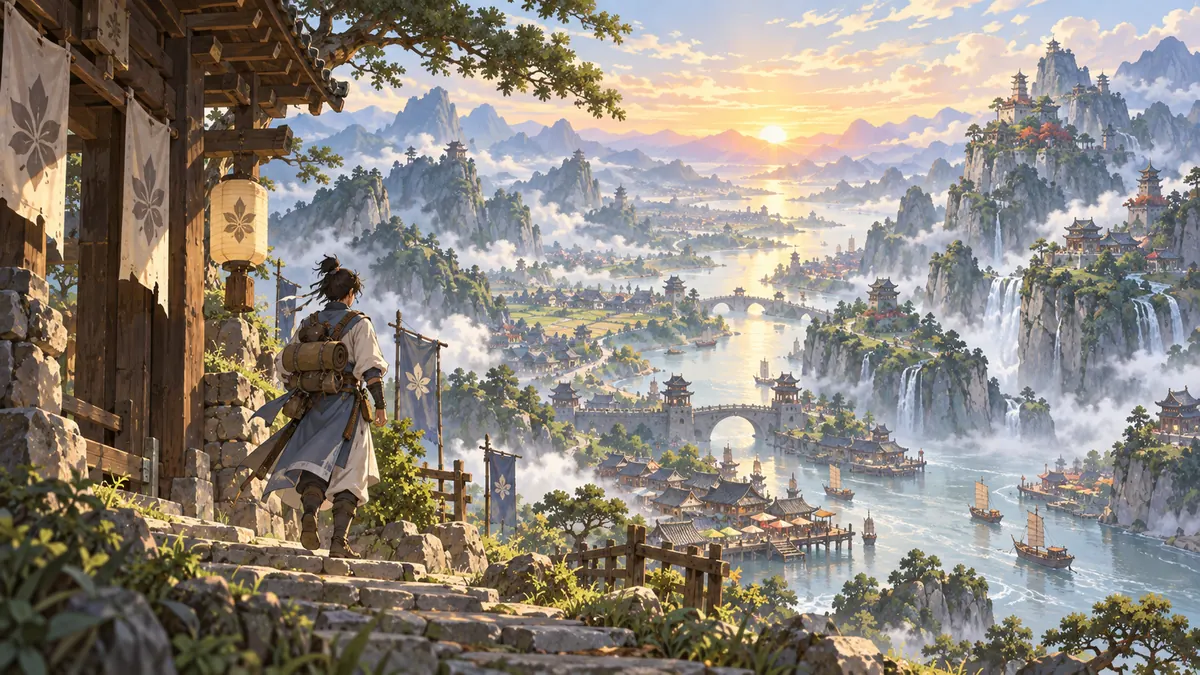
Kangho Online is not a game where one hero follows a fixed story. You are born into the jianghu as an eight-year-old child and decide for yourself what kind of person you grow up and live as.
One enters the Shaolin gate and studies a single sect's art in depth; another makes a name as a swordsman of Huashan. Even the same art is wielded differently according to exertion and mastery, body and inner force.
Some learn the demonic arts the world calls forbidden. But that choice alone does not make a person evil. You can burn your own blood to save someone, or trample the weak with a sword learned at a noble school. What the jianghu remembers, in the end, is not the name of the art but what you did with it.
NOW IN THE GAME
아래는 베타를 준비하는 판에 실제로 들어 있는 것만 모았습니다. 이 쪽의 다른 글에는 앞으로의 설계도 함께 담겨 있습니다.
童 · 어린 시절
모든 협객은 여덟 살 아이로 태어나고, 열여덟이 되면 어른의 얼굴을 직접 고릅니다.
世 · 3D 강호
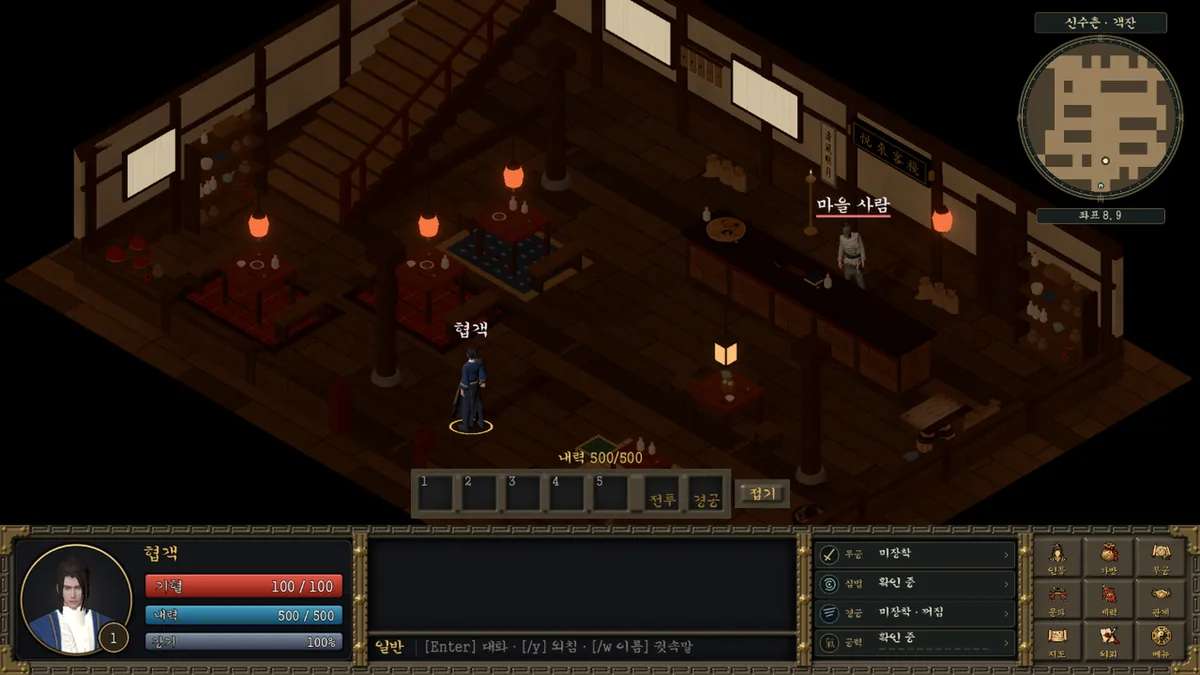
강호의 고장을 실시간 3D 로 걷습니다. 문을 누르면 건물 안으로 들어갑니다.
話 · 대화
인물의 그림과 함께 대화하고, 갈래를 골라 이야기를 잇습니다. 상인과는 거래 창을 엽니다.
門 · 입문
신수촌의 종남파 장로에게 외문제자로 입문합니다. 다른 문파의 산문은 준비 중입니다.
書 · 비급
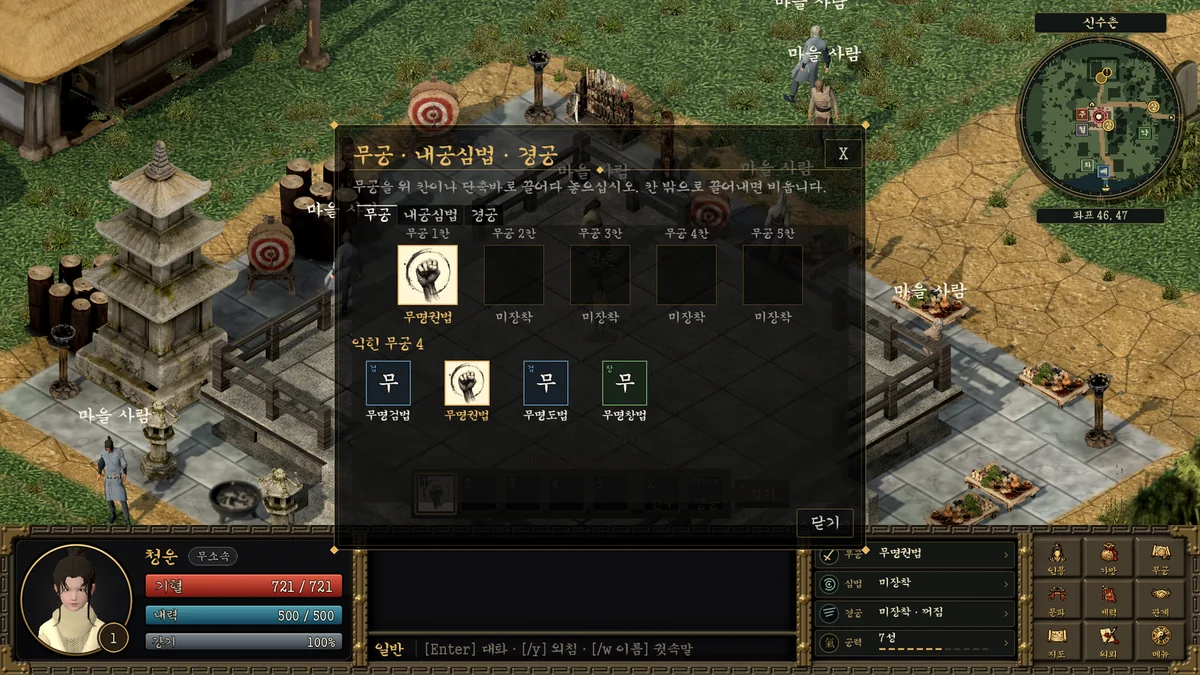
고장마다 비급을 건 의뢰가 있습니다. 얻은 비급을 읽으면 그 무공을 익힙니다.
輕 · 경공
경공을 펼쳐 빠르게 내달리고 뛰어오릅니다.
擊 · 타격
공격은 3D 공간에서 맞았는지를 가립니다. 피해 숫자는 때린 이와 맞은 이에게만 보입니다.
決 · 결투
베타에서는 두 사람이 모두 받아들인 결투만 엽니다.
魂 · 혼백
목숨을 잃으면 혼백이 되어 제 몸을 찾아 걷습니다. 아이는 처형당하지 않습니다.
採 · Gathering
바위의 광석과 약초를 캡니다. 캔 자리는 사라지고, 시간이 지나면 다른 자리에서 다시 납니다.
搜 · 뒤지기
마을의 항아리와 자루, 무기걸이를 뒤져 쓸 만한 것을 찾습니다.
獸 · 짐승과 적
마을 밖 숲과 들에는 짐승과 산적이 삽니다. 처음 만나는 상대는 길잡이에서 볼 수 있습니다.
LIVING JIANGHU
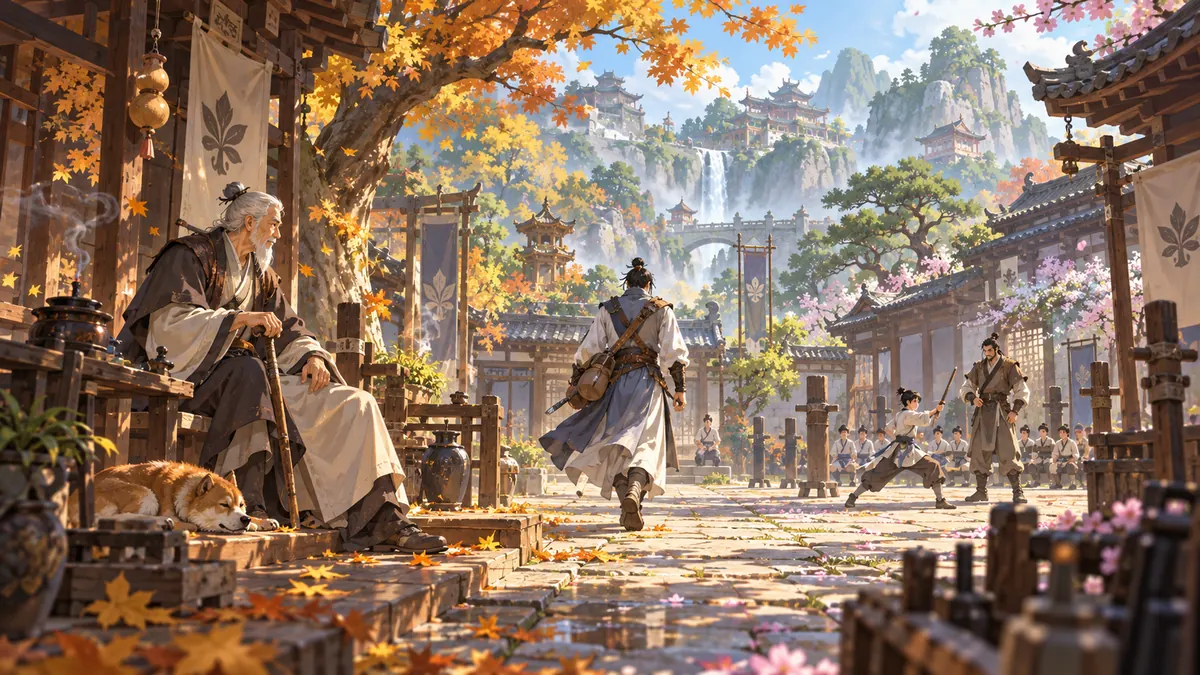
A master grows old and a disciple takes their place. You grow and age within the same passage of time.
Time in the jianghu does not stop. Sect leaders grow old, masters die, and the next generation takes their place. The other people of the jianghu live through the same age too. Masters and disciples grow older, and a sect's seats pass down the generations. The jianghu of today and the jianghu of the next age will not remain exactly the same.
01 · LIFE
You train, form bonds, grow old, and finally die. The choices of one life do not end with that era — they remain as traces in the jianghu of the next generation.
02 · REINCARNATION
After reincarnation, your former self may already have become a figure of history. Some may call that person a hero; others may have recorded a demon.
03 · KNOWLEDGE
An opponent's exact exertion, mastery and depth of inner force are not helpfully displayed on screen. You must read them through posture, presence, breathing, blade speed and a single exchange.
04 · LEGACY
Every famous supreme art has its own origin and lineage, the people who left their names on it, and the events tied to it. To learn an art is to meet the story of the jianghu through which it was carried.
05 — 08
Combat is built less around spending fixed techniques in turn than around the feel of actually wielding the arts you chose.
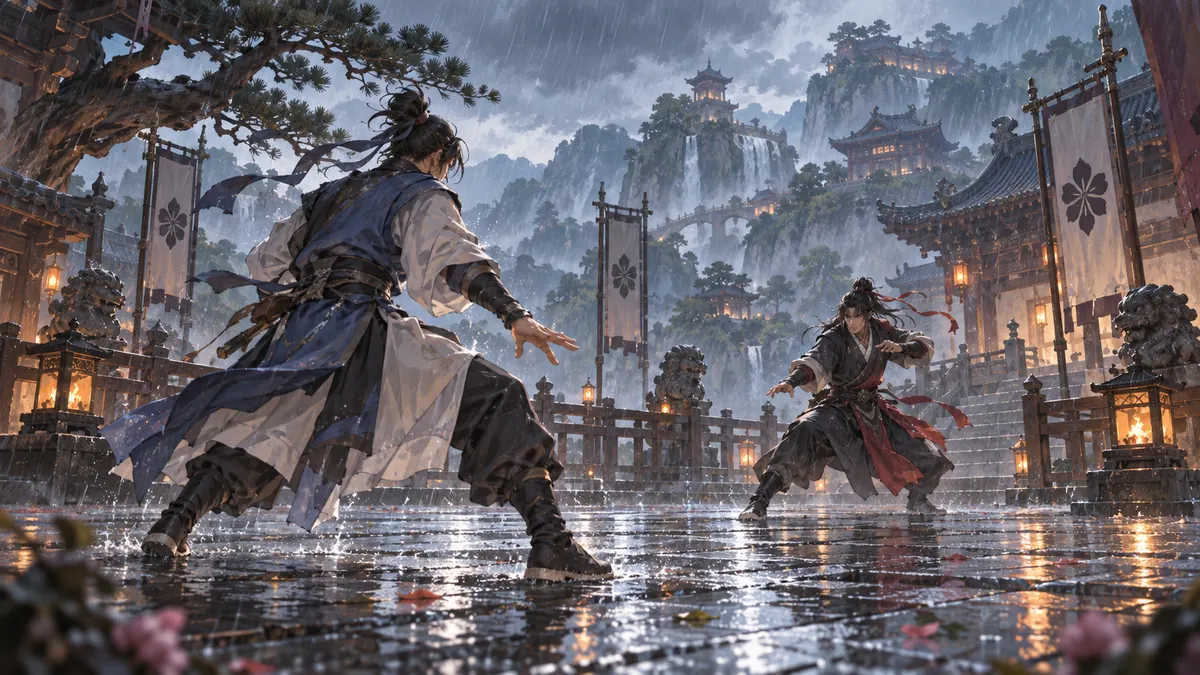
Hold an enemy and keep attacking, and the forms within one art flow into each other; switch to a different art as the moment demands.
Arts differ by more than raw damage. One sword art cuts off an opponent's next move; one palm art stacks cold; one sabre art specialises in breaking auras. And for any art, how far you raise your exertion changes both its power and its cost in inner force.
05 · WIELDING THE ARTS
In combat you switch freely between the arts you chose as the situation demands. Breaking an opponent's aura, opening a gap, and linking into another art — that is what matters.
06 · POWER
Using a powerful form does not always mean going all out. You can lower your exertion to conserve inner force, or raise it at the decisive moment to stake everything on one stroke.
07 · MASTERY
A novice imitates the forms; a martial artist near the peak cuts away even the gaps and recovery motions between forms until it all reads as a single flow.
08 · AURA
고수는 몸 밖으로 기를 두르는 강기를 운용합니다. 강기가 남아 있는 동안 피해를 크게 줄일 수 있지만, 파강에 특화된 무공과 공력이 크게 앞서는 상대 앞에서는 무너집니다.
The same sword art becomes an entirely different fight depending on the inner art driving it.Inner ecology
09 — 12
Martial learning in Kangho Online is never completed by external technique alone.
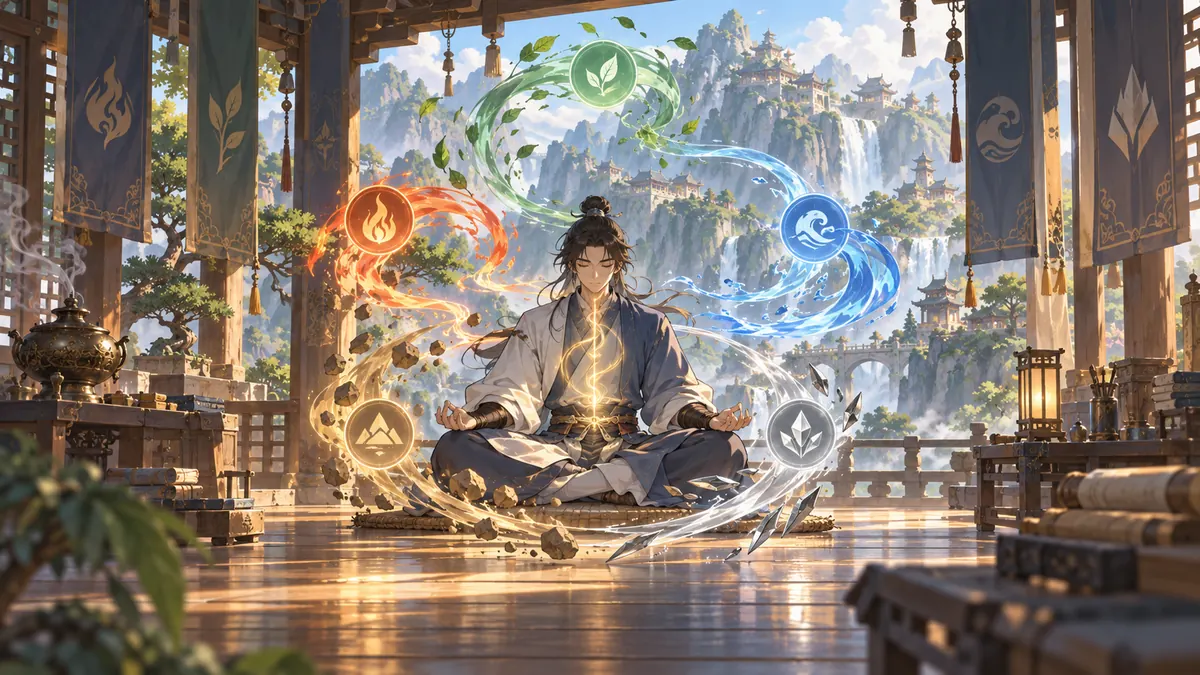
Which inner art you circulate, what constitution you were born with, and how far you can harmonise different energies in one body all bear directly on combat and growth.
The five phases are not mere colours but a principle of affinity and circulation. Wood, fire, earth, metal and water generate and overcome one another, and yin and yang shift both flow and balance. Forcing several inner forces together can cause conflict; a martial artist of high understanding and control can make different energies coexist, or even fuse them.
09 · INNER ARTS
An inner art affects not only the volume of qi but aura, recovery, the stability of the meridians and the character of circulation.
10 · FIVE PHASES & YIN-YANG
Overcoming presses down an opponent's energy; generating supports your own flow. But no single strong affinity decides every contest.
11 · INNATE FRAME & CONSTITUTION
One person holds an aura longer; another adapts well to shifts in the meridians; another excels at rapid forms.
12 · CONSEQUENCE
Reverse circulation, blood qi and demonic qi grant greater power but can leave a burden on body and meridians. Strength is always the result of a choice.
13 · LINEAGE
Joining a sect does not mean receiving every manual.
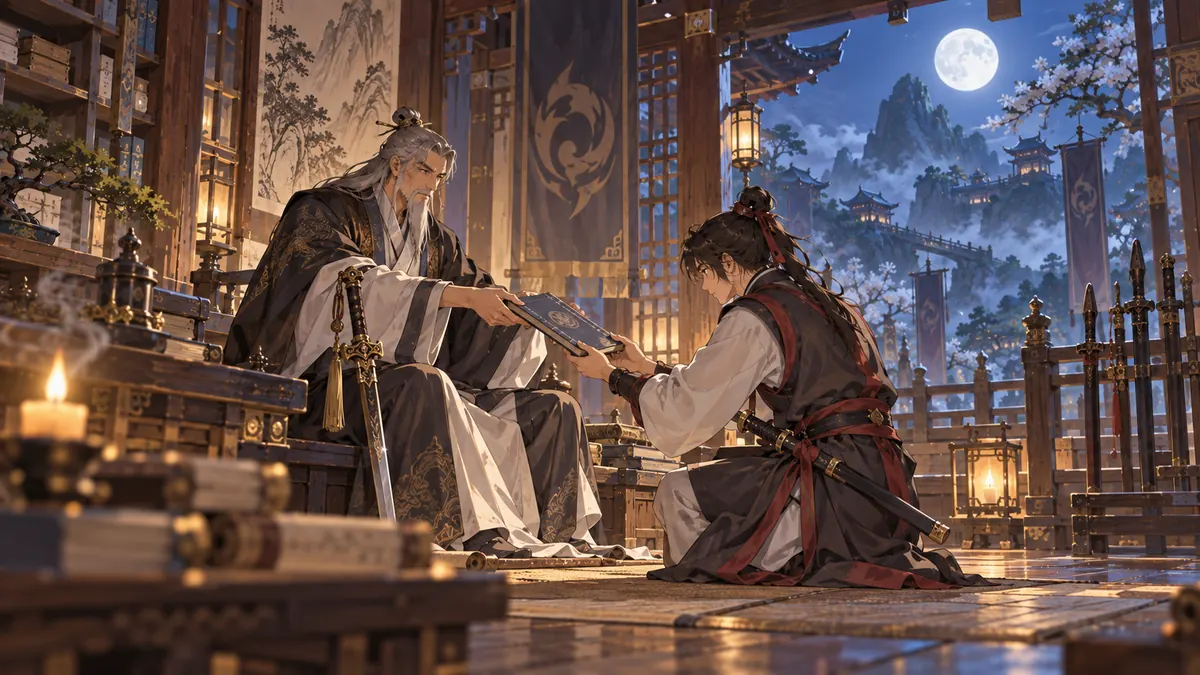
You begin as an outer disciple, accumulate merit, build a bond with a teacher, and earn trust through your own training and conduct before deeper transmissions open to you.
You may also leave a sect. What you have already learned does not vanish from your body. But from the moment you walk out of the gate, the road to new transmissions may close, and your standing with former fellow disciples may change.
Which arts you can learn, and how they are transmitted, depends on the sect and the lineage. What you have mastered stays yours, and the road to new transmissions changes with the path you choose next.