KOEN
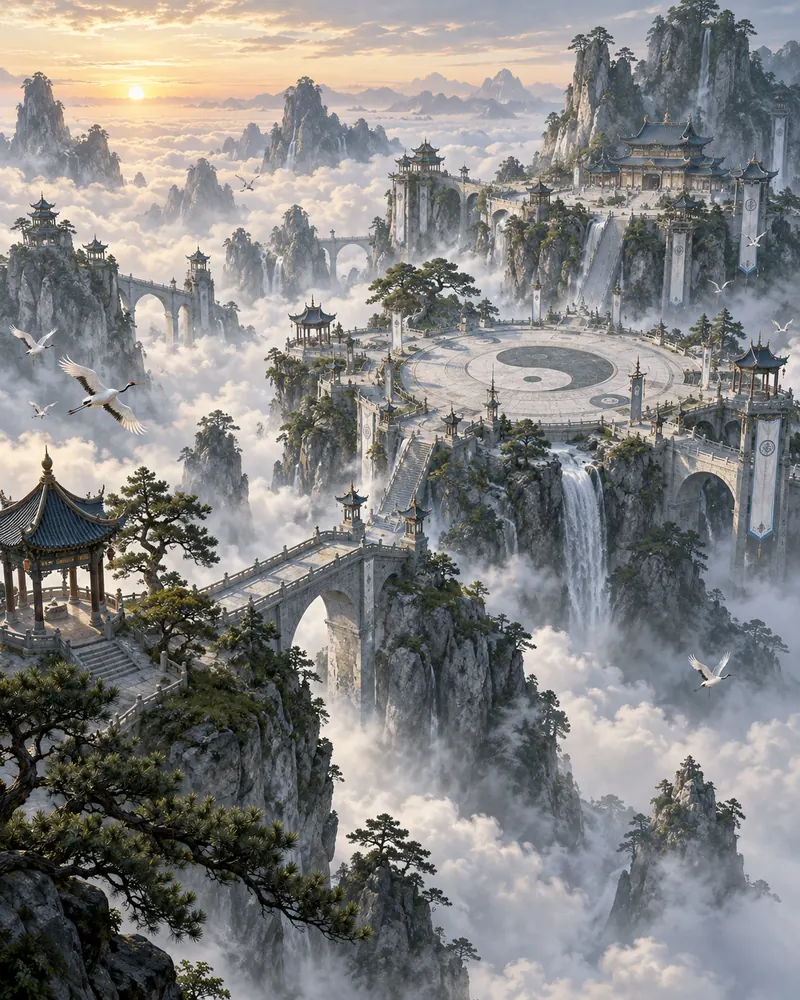
Wudang — a Daoist temple standing above the clouds

05 · NINE GREAT SECTS

Nine Sects

Nine mountain gates, nine histories. They lived through the same jianghu, but no two sects walked the same road.

Today people group Shaolin, Wudang, Huashan, Emei, Kunlun, Kongtong, Qingcheng, Diancang and Zhongnan together and call them the Nine Great Sects. But they were never one alliance from the start, nor a group sharing one philosophy.

One grew in a temple, one at a Daoist mountain gate, one in the real fighting of highlands and borderlands. They duelled, competed for disciples, and in some ages fought like enemies.

Even so, over centuries they became the nine axes holding the oldest and deepest transmissions in the jianghu.

To understand the Nine Great Sects is not to know nine martial arts,
but to understand nine histories.
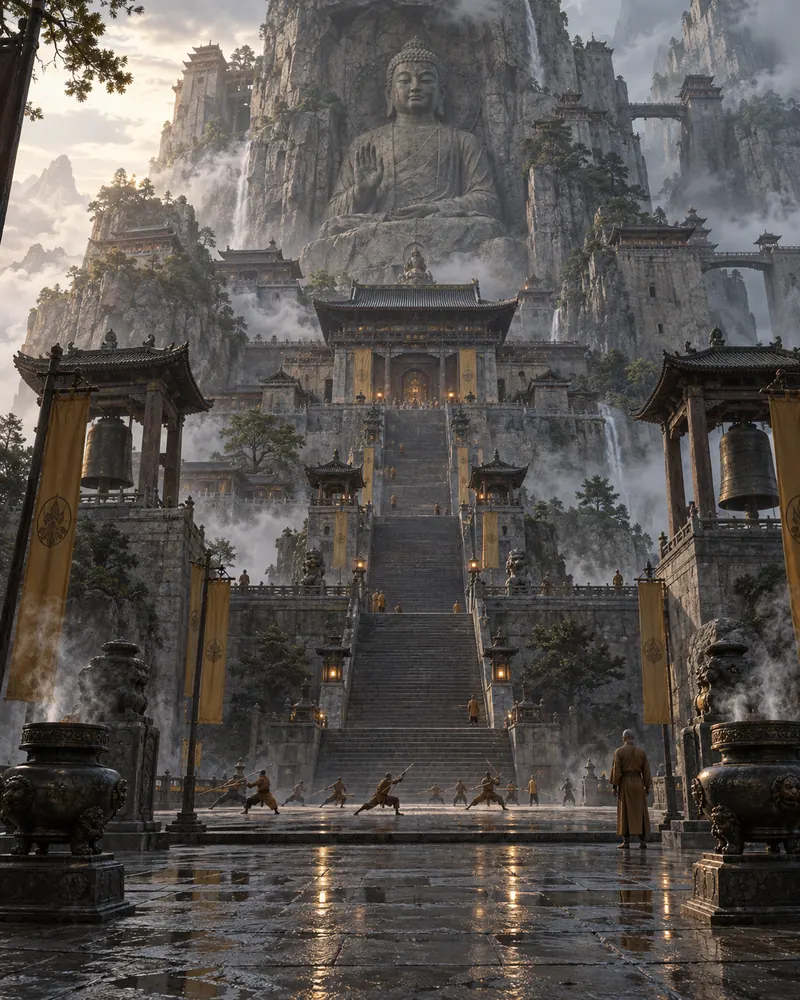
Shaolin — the vast root of Buddhist martial learning, cultivating body and mind together.

Shaolin

少林 · SHAOLIN

The vast root of Buddhist martial learning, cultivating body and mind together.

Shaolin's history is hard to tell apart from the teaching of the Patriarch Bodhidharma. After he combined the old principles of practice he met in the East with his own meditation and set them upright again, later monks systematised it over centuries into a training of body and breath, meridians and mind.

Shaolin's strength does not come from one manual. It lies in repeating basic forms, frame training, breathing and aura handling for a very long time until the body itself becomes the weapon. So a Shaolin master is remembered less for dazzling forms than for 'a body that does not fall' and 'power that lasts to the end'.

Character of the sectWeight, frame, aura, the long fight, stable circulation.
Philosophy of transmissionBuild a strong mind before a strong body, and learn to control your power.
Martial characterStrong in a head-on contest; heavy handling with excellent aura retention and resistance to being broken.
Signature transmissionAdamant Indestructible SutraKnown as the highest transmission, pushing Shaolin's body-guarding and frame training to the limit.
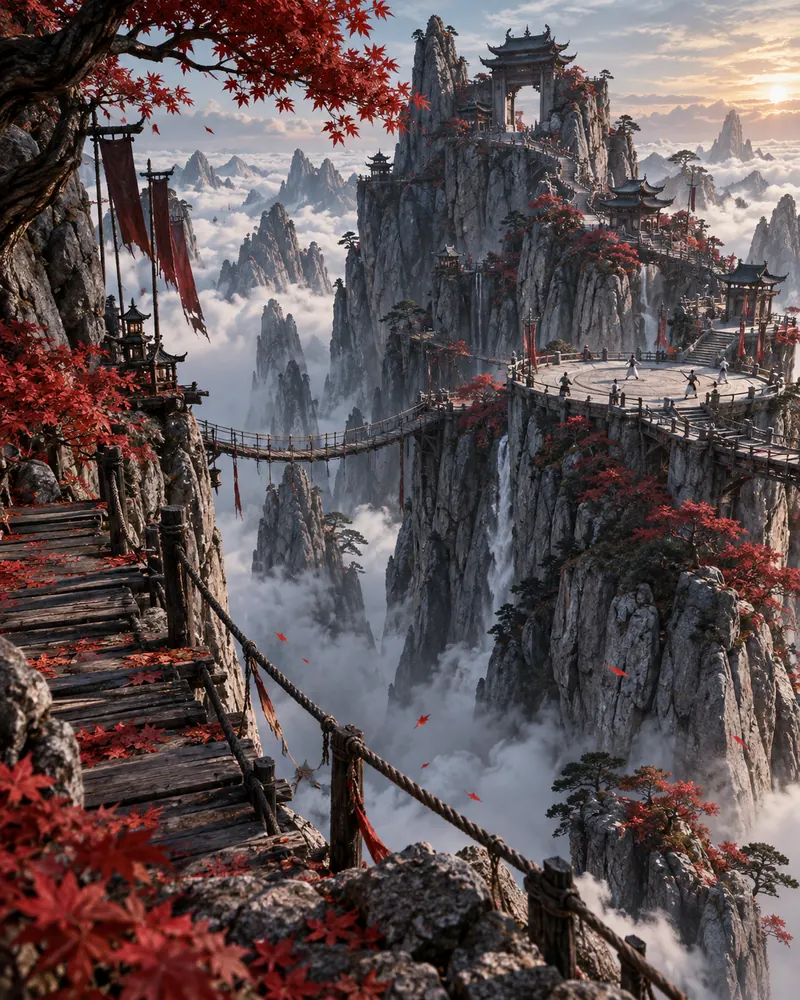
Wudang — the heart of Daoist martial learning: never meeting force with force, but turning the flow.

Wudang

武當 · WUDANG

The heart of Daoist martial learning: never meeting force with force, but turning the flow.

The figure who left the greatest mark on Wudang's name is Zhang Sanfeng. Drawing on countless earlier Daoist methods, he organised yin and yang, taiji, and the turns of hard and soft into a single martial philosophy.

A Wudang master is not someone who strikes harder the stronger the opponent. They read the direction force arrives from, twist that flow, and make the opponent lose their own balance. Imitated by a beginner it looks slow and weak; practised well, Wudang arts turn an opponent's force itself into your opportunity.

Character of the sectTaiji, yin and yang, softness overcoming hardness, counters, control of flow.
Philosophy of transmissionNot to defeat force, but to decide where force will go.
Martial characterStrong in timing, deflection, counters and state transitions rather than direct firepower.
Signature transmissionZhenwu Seven Absolutes FormulaHanded down as the higher formula that binds Wudang's many arts and the flow of inner force into one.
Huashan — the sword sect that links, breaks and blooms again like a plum blossom.

Huashan

華山 · HUASHAN

The sword sect that links, breaks and blooms again like a plum blossom.

Huashan's transmission was not made at a stroke by a single founder. Old Daoist lineages and the real fighting of countless swordsmen layered over generations into the Huashan swordsmanship of today.

The Huashan sword values an unbroken sword momentum over one powerful cut. Before a form ends it opens the road to the next, and if the opponent blocks, that block itself becomes the footing for the next change. That is why people who have fought a Huashan master say 'the sword keeps blooming'.

Character of the sectLinking, variation, sword momentum, continuous pressure, the image of the plum blossom.
Philosophy of transmissionThe next form must be alive before this one is finished.
Martial characterContinuous sword forms, natural linking between them, attacks that never break the flow.
Signature supreme artPlum Blossom Limitless Sword IntentThe summit of Huashan swordsmanship, prizing endless variation and sword intent.
Emei — a mountain sect's sword, where softness and severance, mercy and resolve live together.

Emei

峨眉 · EMEI

A mountain sect's sword, where softness and severance, mercy and resolve live together.

Emei is a sect hard to explain through one famous founder. Mountain ascetics and self-defence arts, Buddhist transmissions and regional martial learning overlapped for a long time before settling into a single sect.

Emei's arts look composed and restrained on the surface, but at the decisive moment they are very fast and very sharp. They spend no unnecessary force, then seize the one instant an opponent's meridians and breathing waver to end the contest.

Character of the sectPrecision, meridian-severing, purification, quick resolve, a composed sword.
Philosophy of transmissionDo not cut needlessly; but when you must cut, do not hesitate.
Martial characterStatus effects and striking weak points — short, precise, explosive combat.
Signature supreme artBuddha-Light Annihilation SwordEmei's highest swordsmanship, gathering precise control and resolve into a single sword momentum.
Kunlun — martial learning tempered on high mountains and hard roads, piercing a single point.

Kunlun

崑崙 · KUNLUN

Martial learning tempered on high mountains and hard roads, piercing a single point.

Kunlun grew on the ranges and passes far from the centre of the Central Plains. With countless travellers and fighters and the combat methods of different regions passing through, unfamiliar movement and practicality mixed naturally into Kunlun's arts.

Rather than breaking something strong with something stronger, Kunlun values finding the weakest single point inside an opponent's structure. Auras too are broken by striking the instant their density wavers, rather than being worn down head-on.

Character of the sectPenetration, weak points, high-ground footwork, precise aura-breaking.
Philosophy of transmissionThe mountain is vast, but the road opens at one point.
Martial characterStrong in exact timing, attacking weaknesses, and piercing aura density.
Signature supreme artSupreme Void Dragon-Slaying SwordThe summit of Kunlun swordsmanship, made for facing auras of high density.
Noted spear artCloud Dragon SpearKunlun's signature spear art, thrusting while shifting range and elevation.
Kongtong — a sect that wields fierce power and reckons its cost along with it.

Kongtong

崆峒 · KONGTONG

A sect that wields fierce power and reckons its cost along with it.

Kongtong's old transmission is handed down in connection with the Daoist tales of Guangchengzi, but today's Kongtong arts are closer to the work of countless practical fighters refined across generations.

What marks Kongtong is that it does not hide the 'cost' of power. Exert fierce power and body and meridians bear it in equal measure. Kongtong training teaches both how to draw out that power when it is needed despite the risk, and how to endure it.

Character of the sectFierce power, strain on the meridians, explosiveness, a strike that accepts its price.
Philosophy of transmissionGreat power always has a price. What matters is knowing that price as you use it.
Martial characterHigh burst firepower with risk management, and the timing of powerful forms.
Signature transmissionSeven Wounds Origin-Return FormulaA higher transmission that controls the cost of fierce power while handling the Seven Wounds line.
Noted sabre artsHeaven's Pole Sabre · Dark Heaven SabreKongtong's signature sabre arts, showing two different approaches to pressure and power.
Noted spear artDemon-Subduing SpearKongtong's signature spear art, built around breaking through and holding down.
Qingcheng — a sect that fights with footwork, variation and judgement half a beat ahead.

Qingcheng

靑城 · QINGCHENG

A sect that fights with footwork, variation and judgement half a beat ahead.

Qingcheng grew as old Daoist lineages mixed with mountain combat arts. Zhang Daoling's Daoist transmission remains its spiritual root, but today's Qingcheng arts are closer to movement made by countless fighters surviving on mountain paths and in gorges.

A Qingcheng martial artist never stays long in one place. At the instant the opponent moves to attack they have already changed angle, slipping past force that came in straight and thrusting again from another direction.

Character of the sectFootwork, variation, feints, angles, quick transitions.
Philosophy of transmissionAvoid where they are strong, make them follow, then strike where they are empty.
Martial characterCombat strong in mobility and linking, changes of direction and quick re-entry.
Signature supreme artClear Void Formless SwordThe summit of Qingcheng swordsmanship, never settling into a fixed form but making openings out of change.
Noted sabre artsAzure Cloud Sabre · Wind-Thunder SabreQingcheng's sabre arts, one of supple flow and one of quick pressure.
Noted spear artClear Void SpearQingcheng's polearm transmission, using footwork and long reach together.
Diancang — the martial learning of the thrust and the straight line, never missing a point.

Diancang

點蒼 · DIANCANG

The martial learning of the thrust and the straight line, never missing a point.

Diancang grew out of life and real fighting in rugged mountain country. On cliff paths and narrow mountain roads with no space for a wide swing, one short, exact thrust mattered more than a long motion.

That practicality became an aesthetic over generations. A Diancang master chooses a single point among an opponent's countless movements and concentrates every force there.

Character of the sectStraight lines, penetration, precision, reach, breaking through one point.
Philosophy of transmissionOne true stroke is worth more than a hundred feints.
Martial characterStrong at seizing weak points, straight-line penetration and fighting at range.
Signature supreme artForty-Eight Swords of the Returning WindDiancang's highest swordsmanship, carrying straight-line precision and unbroken re-entry.
Zhongnan — the mountain gate where old Daoist lines and the traces of lost manuals overlap most.

Zhongnan

終南 · ZHONGNAN

The mountain gate where old Daoist lines and the traces of lost manuals overlap most.

Zhongnan is where the Daoist line of Wang Chongyang and Quanzhen and the transmissions of many Daoist practitioners overlapped for a long time. So Zhongnan's arts are less a single straight lineage than manuals and formulas of many ages laid down in strata.

It holds that many lost arts and unfinished records too. For a Zhongnan disciple it is not rare for one line on an old stone wall or half a sword manual to be the beginning of a new transmission.

Character of the sectDaoism, old documents, ancient lineages, deep inner force.
Philosophy of transmissionDo not discard what is forgotten; find the road again in what remains.
Martial characterArts from varied lineages and stable inner-force handling.
Signature supreme artTaiyi Limitless Sword FormulaZhongnan's highest swordsmanship, joining Daoist circulation with the sword formula.
Noted sabre artsHeaven's Might SabreZhongnan's signature sabre art, valuing a solid blade and fierce power.
Noted spear artTaiyi Spear · Heaven's Might SpearTwo spear arts that unfold Daoist circulation and the force of a polearm in different ways.
A sect is not a menu of classes; it is the choice to step inside one martial ecology.Nine gates, one jianghu

The Nine Great Sects each define strength differently. If Shaolin speaks of how to endure, Wudang speaks of how to let force pass. Huashan teaches unbroken sword momentum, Diancang the precision of a single point, Kunlun how to pierce a weakness.

You are not choosing which sect is the 'right answer'. You choose the road that suits your constitution and disposition, your bonds and your goals. And even after joining a sect, not every disciple becomes the same martial artist.

Starting from the same sect, no two people end as the same martial artist.