罡 · Aura
While the aura holds
While your aura remains, damage to your life force is greatly reduced and you are hard to stagger. Bringing down the aura first is the first step to felling a master.
 ONLINE
SYSTEM GUIDE · 03
Rather than picking an art and spending buttons, you actually wield the flow of forms, exertion, mastery and aura.
Systems Arts & Combat
Combat in Kangho Online centres not on “pressing whatever technique is ready, in turn” but on how you wield the art you have chosen now, and when you switch to another.
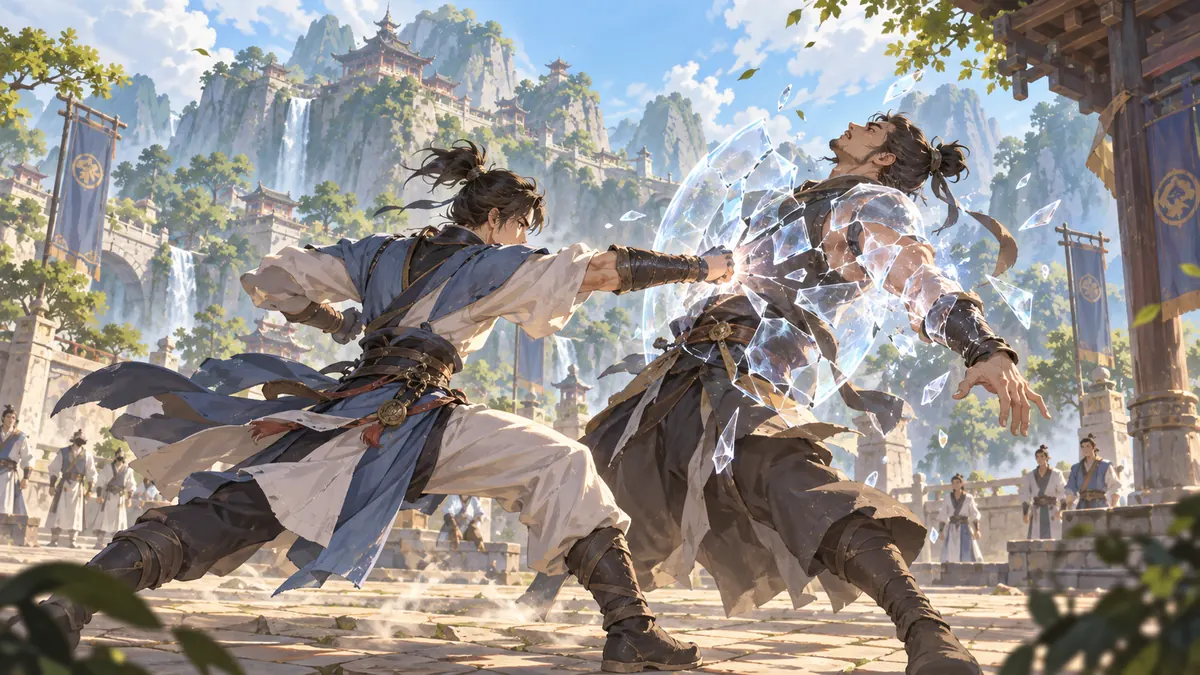
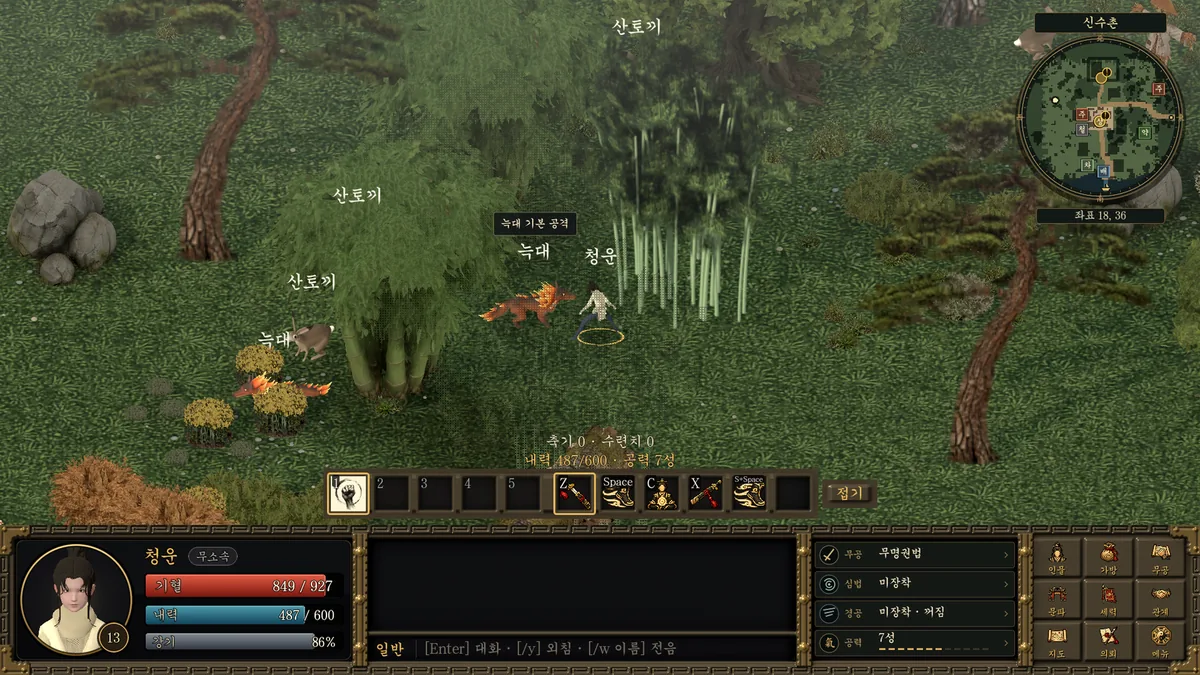
Click or touch an enemy and hold the attack, and the forms of your chosen art continue. Let go and the attack stops. The character does not fight on by itself — there is no autonomous auto-attack.
One art contains several forms that flow together, and a single form may land several strikes. A quick sword that links rapidly and a sabre art preparing one heavy stroke give combat entirely different rhythms, even with the same attack input.
FIVE ARTS
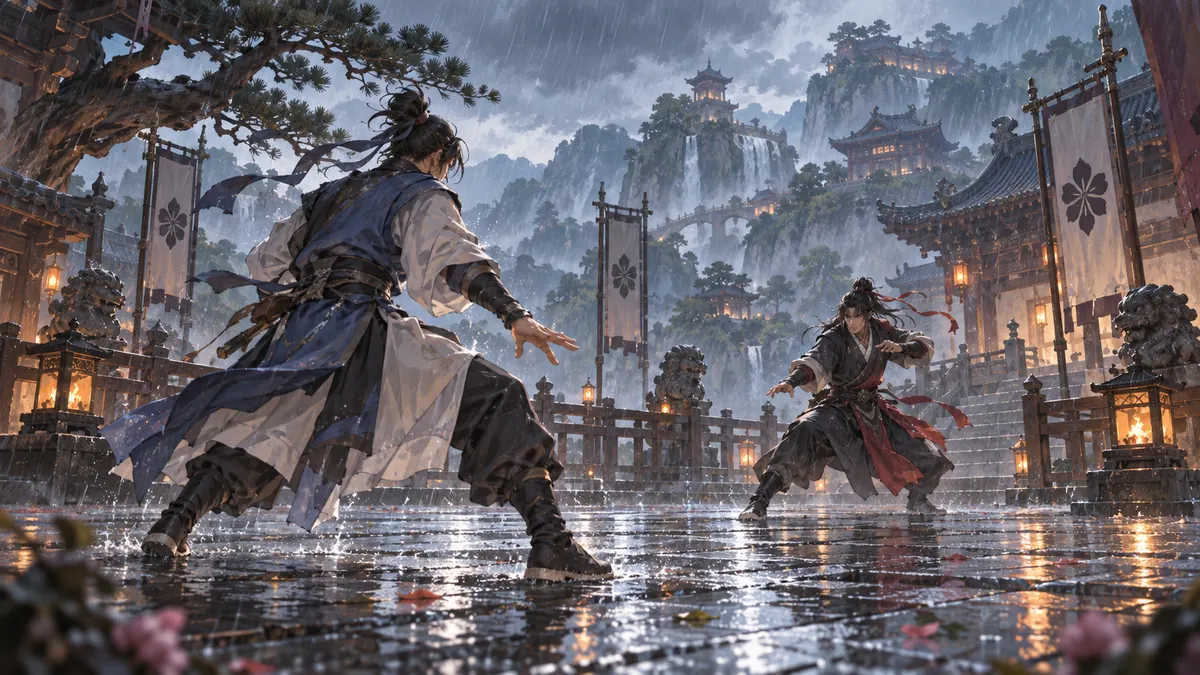
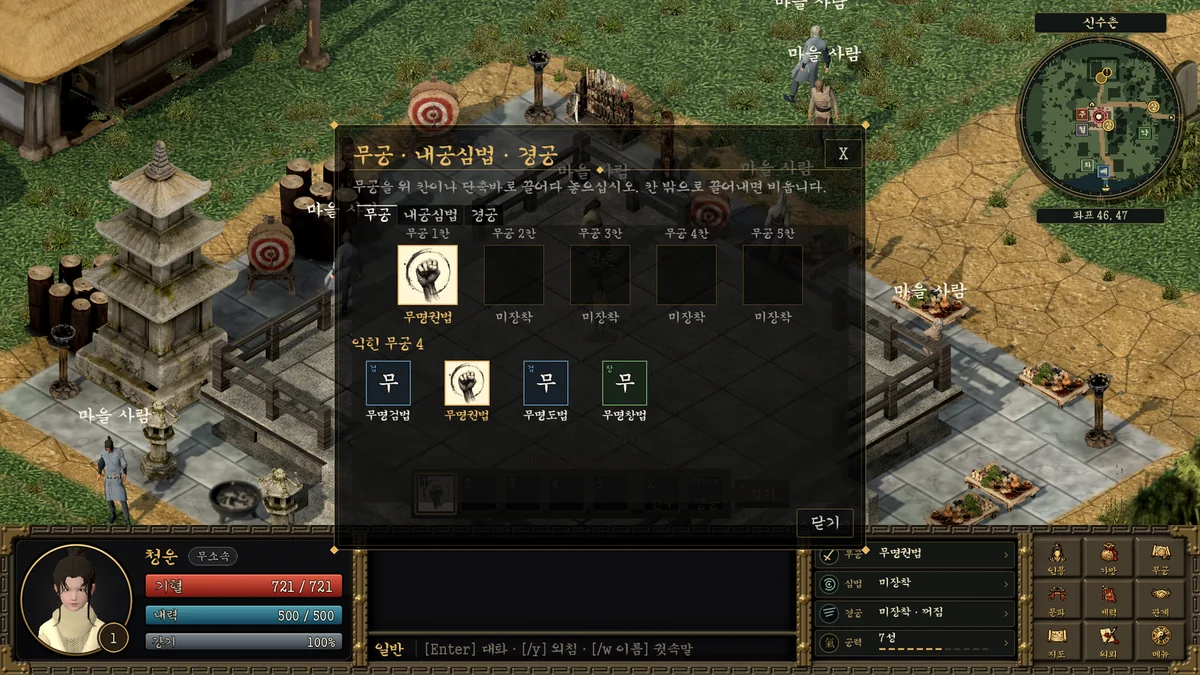
You enter combat with five arts prepared. When you need to break an aura, switch to an aura-breaking art; when you need to close distance, one suited to pursuit; when you want to turn an opponent's flow back on them, a counter art.
1 — 12 星
Low exertion conserves inner force and hides what you are capable of. High exertion sharply raises damage and aura-breaking, but the cost in inner force and the strain of circulation rise just as quickly.
So you cannot judge someone's full strength from the first stroke they show you. A true master may fight at low exertion and keep their power hidden.
| Exertion | Use |
|---|---|
| Tiers 1 — 4 | Exertion for dealing with weak opponents or hiding your strength. Low power, but very little inner force spent. |
| Tiers 5 — 7 | Exertion for an ordinary fight. Tier 7 is the standard, delivering the art's own power at its own cost. |
| Tiers 8 — 10 | Exertion for facing a dangerous opponent. Inner force cost climbs faster than power. |
| Tiers 11 — 12 | The decisive stroke. Power rises sharply, but inner force cost and the strain of circulation grow steeply. |
MASTERY
Mastery of an art deepens through Initiate · Entry · Minor · Major · Pinnacle · Ultimate. It is not a structure where only a damage number rises: the linking and recovery of forms, the efficiency of inner force, and that art's own particular handling all grow more refined.
Mastery rises as far as you use the art meaningfully in real exchanges. It does not count attacks, so pouring forms into empty air or a wall will not deepen it. A proper exchange with a strong opponent teaches the most.
While an aura holds, a martial artist can shed a great deal of damage. So in a fight between masters it is not only about cutting life force — what matters is how efficiently you shake and collapse the other's aura.
근력과 내공, 무공의 파강 성향, 상대 강기의 밀도가 함께 작용합니다. 힘의 차이가 아주 크면 강기와 생명력이 모두 순식간에 무너질 수도 있습니다.
RULES OF GANGQI
罡 · Aura
While your aura remains, damage to your life force is greatly reduced and you are hard to stagger. Bringing down the aura first is the first step to felling a master.
破 · Aura-breaking
A single attack calculates life-force damage and aura damage at the same time, separately. Force left over after breaking an aura does not carry through into life-force damage. The heart of aura-breaking lies in the art itself; the weapon adds only a small adjustment.
會心 · Critical
Critical hits come from the difference in agility and from the art, but they do not ignore the protection of an opponent whose aura remains. Damage over time and status effects do not crit by default.
拳 劍 刀 槍
拳
Whole-body power, close-range pressure, internal injury and chained strikes — a wide range.
劍
Many arts here carry refined flows: linking, variation, and breaking a form.
刀
From heavy pressure to swift blades, the weight of the attack varies greatly by art.
槍
A polearm built around long reach and straight-line penetration, denying approach and fighting at range.